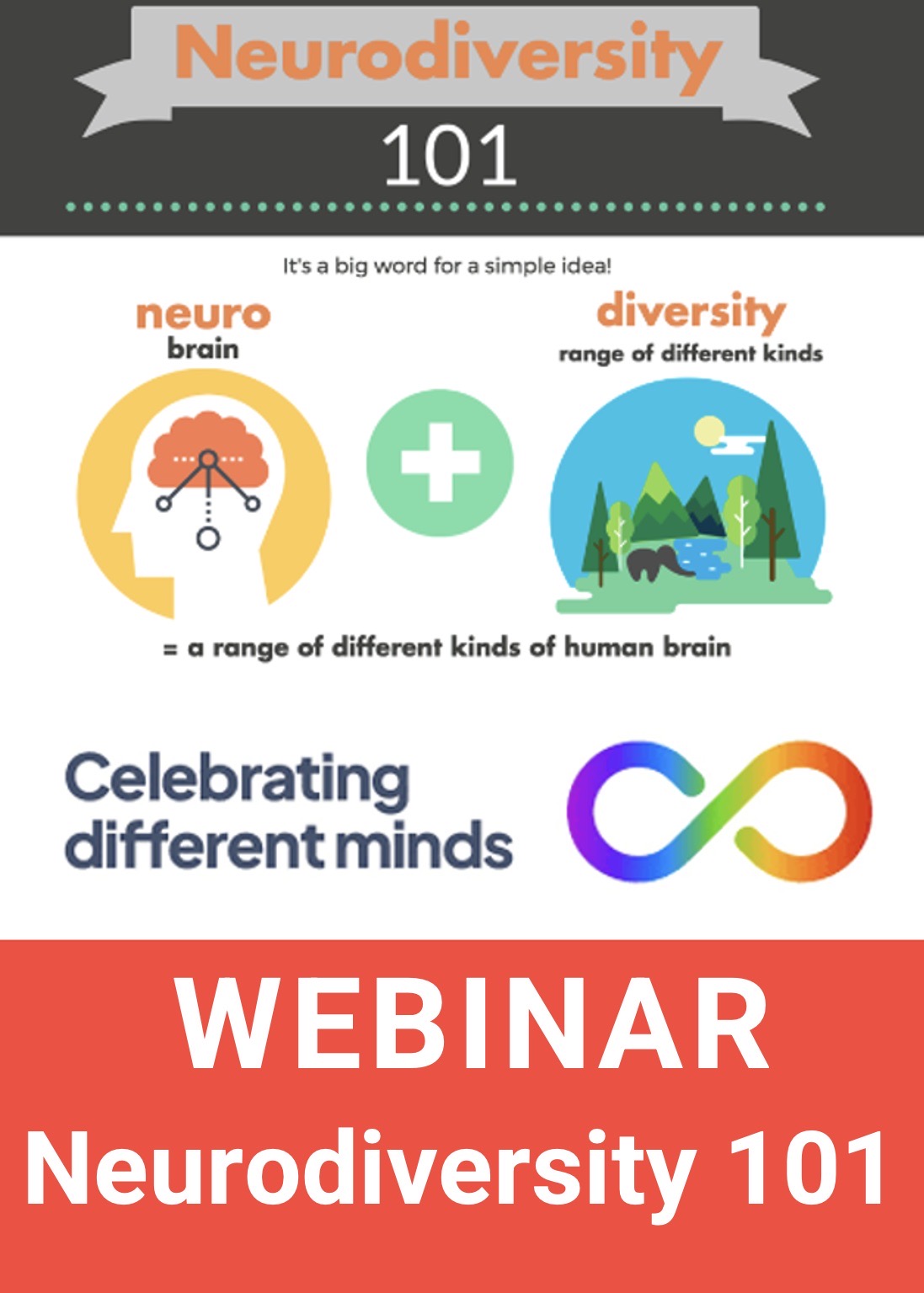
Why is there an idea that there is a ‘normal’ or ‘healthy’ brain or mind? This is no more valid than the idea that there is a ‘right’ or ‘normal’ gender, race or culture. Neurodiversity is therefore an essential form of human diversity and is to be celebrated.
In this is introductory workshop based on the experiences of living with Attention Deficit Disorder (ADD) and dyslexia, we explain the difference between being neurodiverse, neurotypical and neurodiversity.
It will cover how neurodiversity can effect different brain functions such as learning and processing information. Briefly we will define common conditions such as Dyspraxia, Dyslexia, Attention Deficit Hyperactivity Disorder (ADHD), Dyscalculia, Autistic Spectrum, Tourette’s syndrome, and others.
Finally, the session will give solutions as to how organisations can make reasonable adjustments to support their staff, in the same way you might approach mental ill health, by following the guidelines for disability laid out in the 2010 Equality Act.