


Listen to article here.
Sports still has the power to bring people together. Football can still bring people together.
At the inaugural Laureus World Sports Awards in 2000, President Nelson Mandela said, of which he was the first patron, that:
“Sport has the power to change the world. It has the power to inspire. It has the power to unite people in a way that little else does. It speaks to youth in a language they understand. Sport can create hope where once there was only despair.”
With such a timely quote, it reminds us of the joys and tears that can be seen and experienced, in watching this year’s men’s FIFA World Cup. It is the first time in the history of the tournament, that it has been set across three host nations, Canada, Mexico and the USA, with an extended team format of 48 countries competing. Whilst some will say that sports and politics should remain separate, historically, we know that this has not been the case. We saw a merger between the two worlds with the ionic Black Power salute, when African American athletes, Tommie Smith and John Carlos, each wore a black glove and rose their fists, during the playing of the US national anthem at the 1968 Olympics in Mexico City.
We saw the worlds collide again, when Nelson Mandela had inspired the Springboks to World Cup glory at the 1995 Rugby World Cup. Mandela new how important it was for the South African team to win, so that it would help to bring together a country divided along racial lines, due to the impact of Apartheid. In one of many iconic acts by Mandela, we saw him wear a green Springboks jersey and a matching cap, which was symbolic, given that rugby was largely seen as a white man’s sport and a reminder of white minority rule. This gesture was part of what was coined as ‘Madiba Magic’, where the former President was able to unite all South Africans, irrespective of colour, through his charisma.
Therefore, it would be virtually impossible not to consider the political climate that we are currently living in, as we watch this year’s World Cup develop. Indeed, with the current US, Israel and Iran war, and the ongoing conflict in Ukraine, not being aware of the impact of these conflicts on the teams and fans representing those countries, would be naive. Nor would it be right, not to be aware of the travel bans on countries, that have had an impact on fans, teams and referee’s flying out to the host countries, some of which we’ll address later in this article.
How fitting then, that we return to Mandela’s words, in being reminded that sports can be more powerful than the strategies of Governments in breaking down racial barriers, and as he beautifully puts it, “laughs in the face of all types of discrimination.”
So, for this press to workplace article, we’re going to take a whistle-stop tour in reflecting on some of The Good, the Bad and the Ugly, in this year’s 2026 men’s FIFA World Cup.
Main photo by Anthony Maw on Unsplash
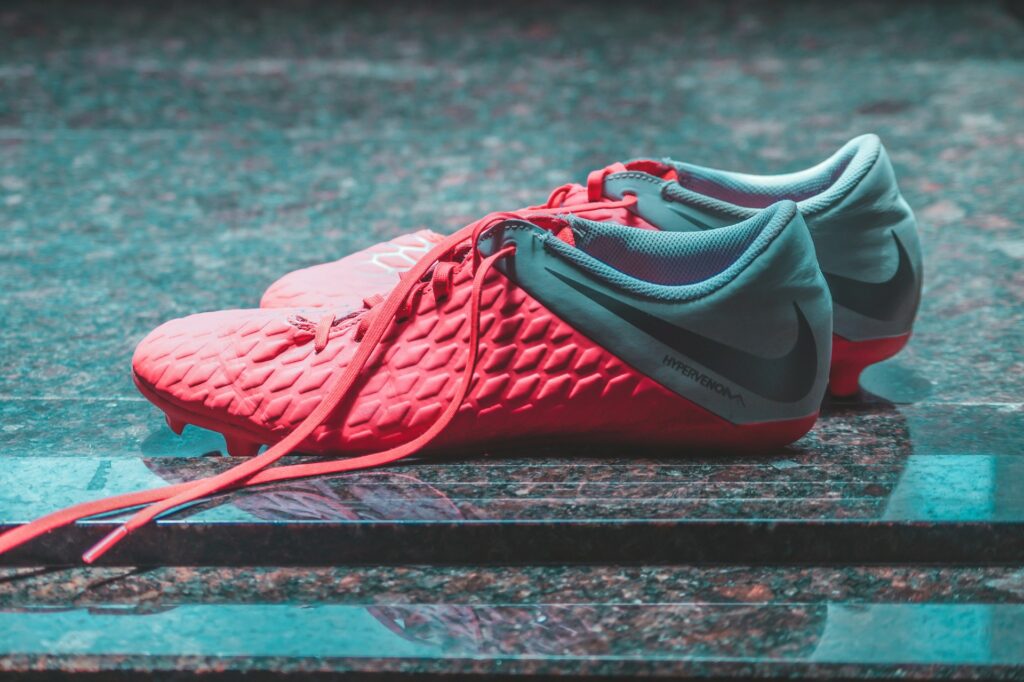
Photo by Kristin Dope on Unsplash
This article was written by Dr Ope Lori, Founder and CEO of Pre-Image Learning and Action.
To read the full article, you must be a PILAA Member.

