
You can listen here
What I’ve Learnt About Antisemitism
What I’ve learnt about antisemitism is how it operates in incipient ways.
It’s the subtle slights, comments and non-comments, made in the very questioning of antisemitism itself, as if to say that such discrimination doesn’t really exist.
What I’ve learnt about antisemitism is that it is not solely about religion, in fact, I believe it has little to do with religion, even though Jewish identity could be described as an ethno-religious (and cultural) identity. Like Judaism, Christianity, Islam, Hinduism, Rastafari, Buddhism, Sikhism, Wicca and the many other faiths and religions practised by groups and individuals, these held internal beliefs cannot be seen.
And so, what I’ve learnt about antisemitism is that it attacks the visible ideas of what it “looks like” to be Jewish or to be misread as Jewish. From members of the Jewish community who wear visible symbols of The Star of David, to the Jewish men and boys who wear the Kippah, or to members of the community (and non-members) who have Jewish sounding names, that are too obvious to be hidden or read as anything else, but Jewish.
What I’ve learnt about antisemitism because of this, is that it sets up a further problem for members of the community who are not visibly Jewish. There will be friends and colleagues who may be culturally Jewish, who identify with Jewish heritage, the traditions, history, ancestry and the community, who will now have to keep silent or hide their participation in various observances, for fear of being targeted as a Jew.
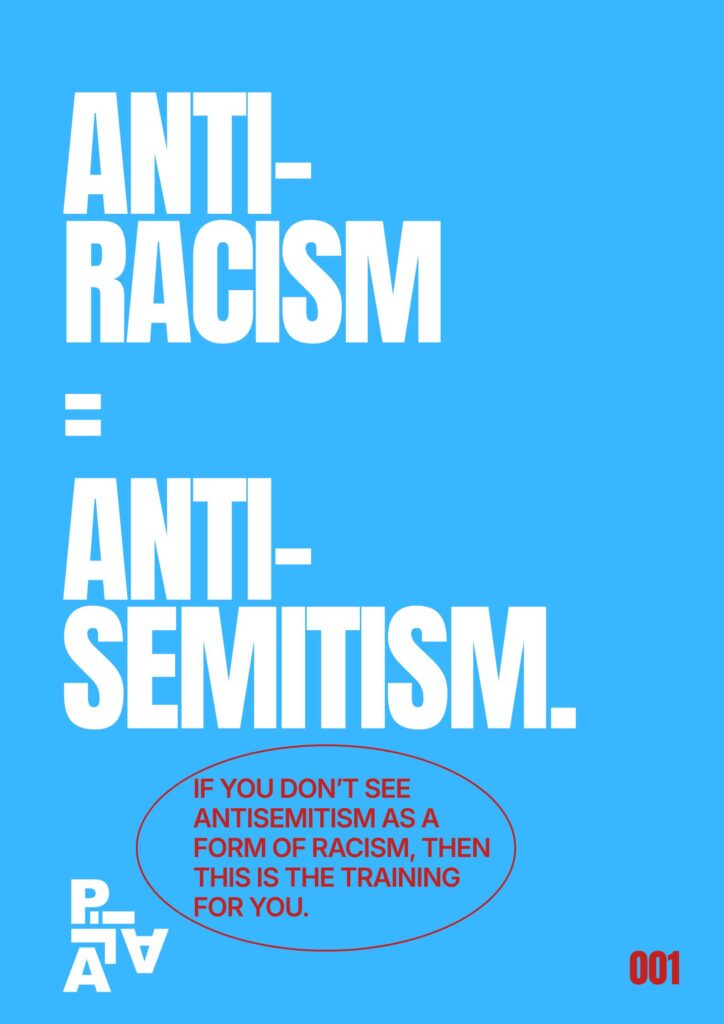
What I’ve learnt about antisemitism is that what should be seen as unequivocally a form of racism to be addressed in anti-racist work, is for some, not seen as part of the struggle. From tackling racial slurs and slights, microaggressive behaviours, discriminatory practices, racial trauma, stereotyping, lumping together a community as if they were representative of the whole, to asking someone who was born and raised in Britain to then speak about a country that they may have never stepped foot on, are by definition, the very issues that anti-racist work has long sort to address.
Yet, what I’ve learnt about antisemitism is that, asking a Jewish person to speak about Israel, or to assume they have an opinion on past or present conflicts, whatever they may be, is fair game, and it’s not.
Ironically, what I have learnt about antisemitism and this particular moment that we are living in, where members of the British Jewish community no longer feel safe and are on the receiving end of high levels of antisemitic hate crimes and ill feeling, is that we have a unique opportunity to perform a system reset. We have a chance to reflect on how we all, as members of British society, get along with one another.
The rise in antisemitism, as well as islamophobia, xenophobia and concerns over growing divisions, hate and intolerance, calls for everyone, on an individual, organisational and societal level, to put aside learnt or perceived differences and come together.
What I’ve learnt about tackling antisemitism (if you’ve made it this far), is that it teaches us more about who we are and who we want to become. It was the great Ruth Bader Ginsburg, the first Jewish woman and the second woman to serve on the US Supreme Court, a pioneer for women’s rights and social justice, that said “fight for the things that you care about, but do it in a way that will lead others to join you.”
And it is with this, that we at PILAA invite you to hold those difficult conversations with us, as we navigate the complexities and nuances of difference, in our workplace training to tackle antisemitism in a divided world.
There is no time like the present, so please join us and get in touch at info@pilaa.co.uk.
Dr Ope Lori, Founder & CEO, PILAA