
Paying Homage to Disability Game Changer Alice Wong (1974 – 2025)

Listen to article here


Alice Wong, the disability activist, writer and gamechanger sadly passed away last month on the 14th of November 2025. Wong was a pioneer of the Disability Justice Movement and there have been floods of accounts and powerful testimonies of who she was and the impact that she has left on the lives of many people, including friends and family, collaborators, and more centrally, to the community of disabled people, that she had tirelessly advocated for and with. As someone living with muscular dystrophy and self-identified as a “disabled cyborg”, she used a powerchair and assistive breathing devices, as well as text-to-speech technology, following losing the ability to speak in recent years. However, she used her voice to not only to raise awareness around the different complexities and challenges of people living with disabilities, and their experiences, but she did so in a way that spoke to the everyday experiences of being disabled, in all its forms, shapes and sizes.

Wong was also the daughter of Honk Kong immigrants, and it was due to these overlapping experiences, that she took aim at dismantling the systemic structures that disadvantaged disabled people, especially those from marginalised groups, whether they be people of colour, immigrants or members of the LGBTQ+ community. She was an advocate for ensuring that people with disabilities should have the full autonomy to live their lives, on their own terms and without permission from others.

Whilst equality, diversity and inclusion (ED&I) is my line of work and more specifically a way of life, I’m aware that the field of disability inclusion, is something that I still need to learn more about, especially where those experiences of disability are outside of my own lived experience. Indeed, even coming across the work of Alice Wong, only came recently, on a visit to the V&A exhibition Design and Disability, which is currently on display until the 15th of February 2026. In this fantastic show that looked at all things around disability, accessibility, communicative technology, art, design and fashion, it was here that I came across Wong’s edited book Disability Visibility: First-Person Stories from the Twenty-First Century (2020), that was being sold in the gift shop.

In addition to purchasing this book, I also bought the exhibitions catalogue of the same name and the children’s book You’re So Amazing (2023) by James & Lucy Catchpole, with illustrations by Karen George. This beautifully written and illustrated story, won the award for the most inclusive book for children in 2024. This is a story about a little boy called Joe with one leg, and how as a society, we respond to those with disabilities, and how we can do better, in sometimes, not “over doing it”.

To celebrate the impact of Wong’s legacy, this article will reflect on some of her words and themes from the book. Whilst the breadth and range of the collection of essays and contributors, aren’t necessarily the focus of this article, for that I urge you as a reader to do the work and get the book, but it is her voice, as the thread that glues them all together that I’ll be drawing upon, as a call to action and a beacon of hope.


This article was written by Dr Ope Lori, Founder and CEO of Pre-Image Learning and Action.

To read the full article, you must be a PILAA Member.

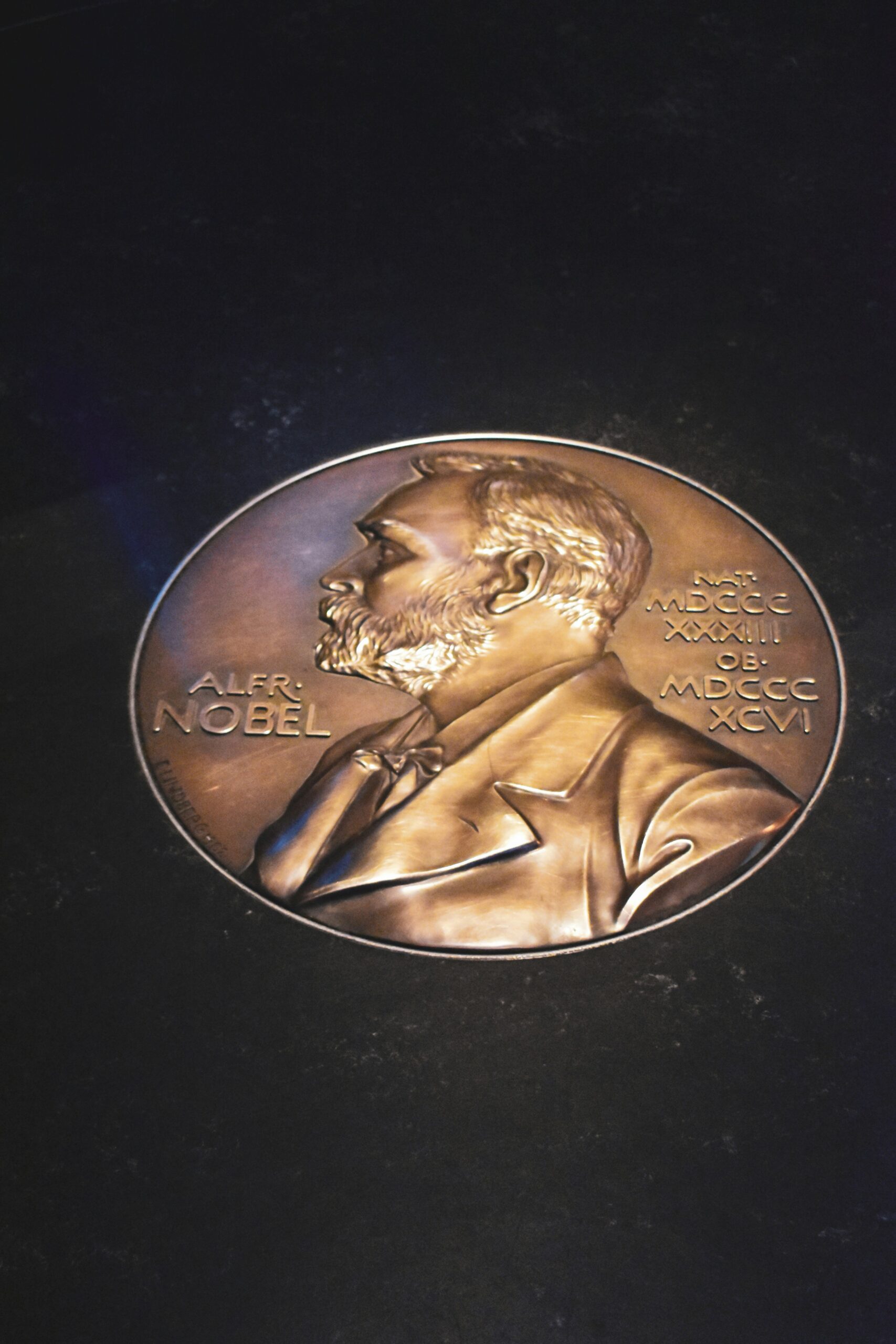
The Nobel Prize and celebrating achievements at work

Photo by Anastasiya D on Unsplash

Listen to article here


Early October is always an interesting and exciting time in certain fields, because that’s when the six Nobel Prizes are announced in medicine or physiology, chemistry, physics, economics, literature and peace. For people who work in these subjects or industries, they are often eager to find out whose discoveries or achievements will be honoured this time; for some, there’s even a hope that maybe this year it could finally be them getting that phone call from Stockholm (or, in the case of the peace prize, that phone call from Oslo). The announcement of the award could be the pinnacle of someone’s career or, conversely, it could be the reason behind crushing disappointment and the worry that their hard work won’t ever be formally recognised.

Perhaps part of the stress and anxiety around the Nobel Prizes or other major awards, such as the Fields Medal for mathematics, or the Oscars or Emmys for acting, or the Turing for computer science and so on, is due to the fact that only one such award is handed out each year, sometimes to just one individual, as in the Nobel Prize for literature or the Golden Globe for best actor, and in some cases to two or three people who have worked together. For every person, pair, trio or small group that is given the award, there are hundreds or even thousands of others who continue to toil and to contribute to their subject area without much acknowledgement. Certainly, many people work at a particular job because they love what they do and they want to make the world a better place, even if in a small way, on a daily basis. But it’s also true that to receive a little bit of gratitude and credit can go a long way. This is important to remember in a workplace.

It’s worth acknowledging that the Nobel Prizes – and all other such awards – are a little controversial. In terms of the Nobel, Alfred Nobel was a Swedish inventor and businessman. He made a fortune when he invented dynamite; while dynamite definitely has its benefits, some people argue that it may also have contributed to the destruction wrought by wars and also led to the deaths of many innocent people. Nobel lived well off this and other inventions and it has been suggested that he tried to assuage his guilt somewhat by writing a will that said he wanted to leave his estate to a foundation that would honour important human – and ideally humane – achievements. A further controversy is that only certain fields are recognised by the Nobel Prizes; besides the lack of mathematics, biology is missing, as are nearly all arts other than literature, the social sciences and still others. This can suggest that those fields are considered to be less vital than the ones that receive an award. Again, this is true of other awards; for each field or individual that is honoured, many others are excluded.

Related to this, many major scientists, writers or activists who are widely considered to have been worthy of the Nobel Prize have not received it, while others who are more or less now forgotten in their fields are viewed as erroneous choices; similarly, some areas within a given field seem to get more attention than others; and some decisions seem very iffy in retrospect. There’s also been plenty of discussion about how biased the Prize committees are and whether their decisions are influenced by geopolitical concerns; as an example, it’s broadly assumed that the literature committee tries not to pick winners from the same nation or same language too often, which means that some of their choices are thought to be forced by such considerations, in turn leading to some literary critics and authors shrugging at or even criticising the Prize in Literature. Furthermore, some recipients of a Nobel have turned it down, such as George Bernard Shaw, or have refused to attend the Award ceremony, not wanting to be linked to such an award or event.


Written by Dr B.J. Woodstein (Research Associate, PILAA)

To read the full article, you must be a PILAA Member.
Protest, Free Speech and the Workplace.

Listen to article here


Perhaps we could describe today’s world thus: it is the best of times, it is the worst of times.

Research suggests that the world we’re living in is safer than it has ever been before at any previous point in history. People are healthier and richer. We have fewer life-or-death concerns. And yet, at the same time, we are still seeing wars, poverty, prejudice, needless violence and preventable illness. People still seem to hate one another for reasons as seemingly minor as the colour of our skin, our spiritual beliefs, where we live, the foods we eat, the way we live and so on. Due to social media and the way it has shrunk the world and made it easy to be in constant contact, anger, pain and hatred are all amplified more than ever. Sometimes it seems like the most furious voices are the loudest, which makes it hard to remember that not everyone shares such virulent perspectives.

Since many of us are now “friends” on social media with colleagues, we sometimes see their opinions, which may differ from ours and even be unsavoury or offensive. It can feel really hard to see people by the water cooler and know that they posted a “humorous” meme about our ethnic group or that they attended a protest in favour of a policy we ourselves feel strongly against. This can ruin our relationship with them and make it challenging to have to collaborate with them or even communicate with them at work. So what can we do?

First, we need to acknowledge that life these days is very tense and that the UK – not to mention other nations – is a large country with a multitude of views. In the past few weeks alone, we’ve seen a protest in London on September 7th that was pro-Palestine and anti-Zionist and that led to a number of arrests, and then a protest the very next day against the increased antisemitism that is affecting the UK, partially in response to the multitude of pro-Palestine actions taking place in Jewish-heavy areas. In Norwich, meanwhile, there have been regular protests outside a hotel that is housing refugees; some of the protests have been agitating for the refugees to leave the UK, while the counter-protests have been arguing that refugees should be welcome here. And that’s just two locations in the UK; the fact is that protests and counter-protests are happening all around the world on a regular basis.

On the one hand, we could argue that it’s a brilliant thing that people are allowed and even encouraged to speak their minds (with the proviso being that this isn’t actually allowed in all countries or for all citizens; there have been news items about people getting arrested or expelled due to protesting). Free speech is incredibly important in order to preserve democracy. We should all be able to say what we think without worrying that we might get arrested, thrown out of a country, or even made to “disappear”. We should all fight for the right of people to say how they feel and think, even if we disagree with their thoughts and feelings. As Evelyn Beatrice Hall wrote in the early 20th century, “I disapprove of what you say, but I will defend to the death your right to say it”.


On the other hand, perhaps we shouldn’t be quite so quick to say whatever we think at any time. We should remember that our words can hurt or offend others. People on the other side of an argument are still just that, i.e. people. We’re all human beings and we all deserve respect and dignity. You might think that political policy X is absolutely and self-evidently idiotic, but that very same policy could protect another human’s life and livelihood; it could just be that you haven’t yet spoken to such a person, so you haven’t learned about the policy’s impact on their life. What would you do if you met such a person and could talk to them about their perspective?

Or, as another example, you might belong to a particular ethnic group and cherish its customs, beliefs, foods and so on, but one of your coworkers might have been taught from their childhood a very stereotyped view of your group. Your coworker could make jokes about your group or even think people of your background don’t belong in this country. How would this make you feel? Would you feel able to say something directly to your coworker or to human resources at your workplace? Would you be willing to collaborate on a project with this colleague? These are just a couple of examples, but they show the importance for all of us in slowing down, trying to learn more about other people and other points of view (such as by meeting people who differ from us), and also in being careful about what we say and when we say it.

This is worth emphasising: even though we have free speech and technically can say what we want, when we want to, to whom we want, we should also try to be sensible and considerate with our free speech. Remember the acronym THINK – is what we are going to say truthful, is it helpful, is it inspiring/important (the “I” in “THINK” can stand for both), is it necessary and is it kind? If it isn’t those things, do we still feel we should say it? Do we really need to say it? Have we considered the potential impact of our words on other people and our relationships with them?


If we do still speak up, we have to also recall that free speech isn’t actually truly free. There are costs to free speech, including in regard to the larger political protests we’ve been seeing more often in recent times. Some costs are financial, such as extra police having to be on duty to watch over the protests and thus not being able to carry out other tasks. Some are practical, such as road closures, increased traffic, changing routes, lack of access to stores or offices and similar. Some are emotional, such as the aforementioned discomfort people might feel with friends, relatives or colleagues, who are attending protests on subjects they don’t share the same views on, or who are experiencing the stress or fear of having to walk past protestors. Some of the emotional or practical costs could also lead to physical ones, such as stress leading to an increased heart rate, which in turn makes someone have a panic attack, or someone having to take an unfamiliar route and being late to work or having a car accident because they don’t know those roads.

In addition, sometimes when people speak freely, they say things that are inaccurate or downright untrue; they may or may not be aware of this and if they are aware, they may not care. This means that sometimes, free speech has the distinctly negative cost of spreading misinformation or falsehoods, and this can incite people to violence or other hurtful actions and can damage others, potentially even costing them their lives.

In short, there are clear advantages and also some potential disadvantages to free speech. So the question then is how this impacts the workplace. At work, we want to get along smoothly with people and do our best to accept them for who they are, not least so we can cooperate on work tasks, even if we aren’t even going to be good friends outside of work who like to go to the pub and celebrate special occasions together. That means we have to acknowledge that we will have differences of opinion and that we should be able to handle this like mature adults.

One way forward would be for a workplace to set a guideline that suggests that people avoid discussions about tricky subjects, such as religion, politics, money, whether to have children or remain childfree, views on sexuality and gender and much more. However, some of those topics may touch on the work you do and be unavoidable. Furthermore, it’s pretty hard, and possibly unfair, to try to restrict what people discuss, especially if it relates directly to their own lives, because then you are asking them not to be their full selves at work.

Instead, then, it could be better to offer guidelines for how people might talk about challenging or controversial subjects. You can remind people, as already noted, to THINK. You can also acknowledge that sometimes it can be anxiety-inducing to discuss certain subjects and that colleagues might want to carefully consider whether they need to cause this anxiety for themselves or others.

If they still do want to discuss a topic, suggest that people invite conversation rather than springing it on someone. It might be better to book a time and location for it, instead of raising it while waiting for the kettle to boil during a brief coffee break. Also, certain conversations could take place in private rather than in the staff canteen or hallway. Additionally, consider whether a neutral party – another colleague or even an ombudsman or therapist – could be there.


Remind people to have an open mind in such conversations. No one knows everything and they certainly don’t know others’ experiences, beliefs, thoughts or feelings. There’s no point in trying to have a discussion if you aren’t going to listen and learn. When you listen, don’t spend the time deciding what you’ll say next and try not to react emotionally to their words, because then you aren’t focusing on their perspective. If you find you are getting too worked up to listen, take a break. Additionally, people should try to use “I” statements, rather than accusing or blaming. A comment such as “I feel offended and upset when I hear people make jokes about X group. I don’t think this is appropriate for the workplace.” works better than “You’re such a jerk because you tell racist jokes at work.”

It’s okay if no resolution is obvious by the end of the conversation. People can agree to disagree, and yet they can still have a slightly better understanding of the other person and their viewpoint after having had an open discussion. A slightly improved comprehension is better than nothing. People can always return to the conversation another time, if all parties would like to.

Also, of course, free speech extends not only to larger societal concerns but also to people talking about specific issues within the workplace, such as complaints about how something is done or worries about a colleague. So make sure all staff know who to talk to if they have concerns about a particular subject, i.e. “Please see X in human resources if you feel you’ve heard a racist/sexist comment.” Or “Please speak to your manager directly if you would like to suggest a new approach.” Don’t leave staff moaning about something in private because they don’t know who to talk to, as this will cause a bad atmosphere for everyone. Let them know a clear chain of command.

In sum, these are in many ways unprecedented times. People are often quite divided and we all feel things very strongly. Free speech is wonderful in theory but can sometimes be challenging in practice and can have real costs. There are steps we can take to minimise these costs, such as by setting time and space aside for having harder conversations and by trying to learn from one another. This is possible both in the workplace and in greater society and we should all strive towards it.


Top tips:

  • Free speech is an important thing and should be protected.
  • That doesn’t mean that it’s okay to say and do anything you want.
  • Remember to THINK before speaking or before clicking “post” or “like” on a message on social media.
  • Go directly to people to talk calmly with them rather than complaining about them. Listen to others’ perspectives.
  • Make sure staff know who to talk to in the case of concerns or difficulties.


Written by Dr B.J. Woodstein (Research Associate, PILAA)

For help with supporting your teams with facilitating difficult conversations, self-censorship and free speech whether with workshop training, working on policies and guidance, or even mediations, please get in touch with our team. We’re here to listen and not to judge.

Faith at Work

 Listen to article here


What does it mean to have faith at work and what does this look like in today’s society? Over the Summer there were a multitude of sporting events, where seeing the sight of sportspeople giving thanks to the presence of the divine in whichever faith or religion they followed, was commonplace. We saw Michelle Agyemang, the young Lioness who helped see the Women’s England football team, hold on to the European Cup for a subsequent four years, praising God for where he had taken them, in a post-match interview with football commentator Alex Scott.

Staying with football, last weekend saw Liverpool FC playing against Arsenal FC’s men’s team, in a game which the former went on to win. Ever since his arrival, it has been commonplace to see Liverpool legend Mohamed Salah, a well-known Muslim player, expressing his faith on the football pitch, by performing the ritual Islamic prayer and by pointing up to the sky before the game starts. The pointing of the finger both indicating the oneness of Allah and being used here to pray to Allah too.

Ellie Rattu the England Roses netball star, recently featured on Songs of Praise: Faith on the Touchline on BBC One, speaking about the importance of, as she put it, faith and sport, going hand in hand in her life. She turns to her Christian faith and speaks about her relationship with God, during times of struggle and challenges she has had to overcome in her life.

Moving away from sports, last month we also heard, which is not entirely new in the world of politics, of the Liberal Democrat leader Sir Ed Davey, speaking about how his Christian faith impacted his politics, and whilst it was something he did not talk about often, it was something he could not separate from policy.


“And although .. other people say religion doesn’t impact your policy, it does impact mine. I don’t talk about it very much. But on this I had to be very honest. I’ve thought and prayed about this. I really have.” – Sir Ed Davey


No matter the arena of work, openly speaking or proclaiming one’s faith can be a tricky conversation to have, especially where shifting attitudes of religion in the UK, show that British society is becoming more secular. In a study by the Pew Research Centre in March this year, addressing the phenomenon of ‘religious switching’ globally, characterised as “a change between the religious group in which a person says they were raised (during their childhood) and their religious identity now (in adulthood)”, figures indicated that those who belong to no religion outnumbered Christians, at 46% to 43%. This being significant, given that Christianity was the most affiliated religious denomination in the 2021 census of England and Wales, at 46.2%, 27.5 million people.

So, what does it mean to practice one’s faith or religion in the workplace, and what do both actually mean? How might they be practiced in the workplace and what is the humanist dimension. Are they one in the same or are they all separate?

Written by Dr Ope Lori (Founder and CEO, PILAA)

To read the full article, you must be a PILAA Member.

Languages in the Workplace

Photo: National Cancer Institute, Unsplash

Listen to article here


Here’s some rather depressing news that will have knock-on effects for years to come: fewer students at less affluent schools in the UK are studying foreign languages. Now, some people won’t think this matters, because, after all, as some people will say, “everyone in the world speaks English” and “learning languages is less important than learning maths or IT”. But this couldn’t be more wrong. Studying languages is an equality, diversity and inclusion (EDI) issue and it’s one that has an impact on workplaces, as well as on people’s brains, self-confidence and personal lives.

First of all, the news article tells us that fewer than half of the students in less affluent state schools study a language, and actually the news isn’t that much better at the more affluent state schools, where fewer than 70% of the pupils choose a language. In other words, on average, only about 50% of young people take a language in the UK to GCSE level, which means that their skills may not even be at a high enough level for them to feel confident going to that country and ordering a meal, never mind trying to conduct a business meeting in that tongue. And for the 50% who don’t study a language to even GCSE level, they won’t be able to communicate with people from other nations unless that’s in their own tongue. It seems a lot to ask for everyone else in the world to always have to use English to communicate.

Even among those who do study a language, the options taken in the UK are primarily French, Spanish and German. Those are all excellent, important languages, but they definitely aren’t the only ones in the world, and they quite possibly aren’t the most essential ones for the future. More than 7,000 languages are spoken in the world today and, interestingly, it’s thought that over 300 different languages are spoken in homes and communities in the UK, of course including Welsh, which is an official language in schools, the Senedd (parliament) and elsewhere in Wales. Currently, the most spoken languages in the world are Mandarin, English, Spanish, Hindi, and Arabic; as noted, only one of those is regularly studied in the UK (Spanish).

Sure, us English-speakers can probably get by with our English, but it shows a lack of respect if we travel or try to do business with people from other nations and can’t even have small talk with them in their language. Our communication options will be decreased and we might miss nuances in our discussions if we try to converse solely in English, which might be a second, third or even beyond language for the people we are talking to.

There are many benefits to speaking other languages. We’ve already mentioned how useful it can be in a business context, because it can improve cultural and practical understanding, prevent confusion or awkwardness, and it can impact interpersonal understanding. From a financial perspective, companies that wish to do business outside their own country’s borders can make a real impact and attract clients by having staff who speak the languages of other nations. As a customer, would you place more trust in an organisation that spoke your tongue or one that didn’t? Which one would you rather do business with and give money to?


Written by Dr B.J. Woodstein (Research Associate, PILAA)

To read the full article, you must be a PILAA Member.

Tiny Experiments and Reframing

Photo by vigor poodo on Unsplash

Listen to article here


There comes a point for nearly everyone when we might get stuck in a rut, in either our professional or personal lives, or, even harder, both. Sometimes we need something to shake us out of that rut or to help us find a new path. That’s where the idea of Tiny Experiments comes in.

Anne-Laure Le Cunff is a neuroscientist, author and former high-level Google employee. Her latest book, Tiny Experiments, and her regular newsletter offer just the inspiration we might need. Her most recent article, entitled The Art of Seeing Things Differently, is worth exploring in more depth, but before that, let’s have a brief overview of Le Cunff’s work and ideas more generally.

Le Cunff runs Ness Labs, which she calls a “playground for curiosity”. The “Ness” comes not from, say, the Loch Ness monster but in fact from the suffix “ness”. Le Cunff references awareness, consciousness, and mindfulness, but we could add many others, including resourcefulness, happiness, healthfulness, kindness, and so on. Part of the concept behind Ness Labs is that we lose some of our natural curiosity and playfulness (another “ness” word!) as we get older, and this negatively affects how we feel about ourselves, our lives and our work. If we can attempt to view things in new and different ways and if we can try out new approaches, activities and ways of thinking and being, we might find ourselves feeling better and actually being more successful at work.

In Tiny Experiments, Le Cunff describes how she gave up her well paid, very respected job at the massive and influential corporation that is Google and wanted to bring back creativity into her life and to challenge herself. Her main idea is that people should make a small pact with themselves and to just show up for themselves, without causing additional stress. It’s a way to try out new activities without pressuring themselves to make it a permanent habit or part of their life. So someone decides, “I will do X for Y [days or weeks].” This could mean, “I will take a salsa class once a week for three months” or “I will meditate for ten minutes every morning before I get out of bed for eight weeks” or “I will spend one hour each Sunday afternoon researching other job options” or “I will invite a different colleague for coffee each month for a year so I can learn more about what other people in my company do”, or whatever else it might be. It’s pretty low-risk, unlike, say, a New Year’s resolution or a firm decision to “get in shape” or “find a new job” or “network more” and so on. People can then see how it goes. After the period has ended, they can either continue the activity, stop it, or change it in some way; Le Cunff refers to this as persist, pause, or pivot. For instance, a person might decide they liked salsa dancing and wanted to continue, or they might find they’d rather try tap lessons, or they might feel that dancing isn’t for them after all and they’d rather try knitting. That’s it. It’s simply a way to try new things.


Written by Dr B.J. Woodstein (Research Associate, PILAA)

To read the full article, you must be a PILAA Member.