

April 2026 – EDI Calendar
To mark Lesbian Visibility Day, which falls on the 26th of April

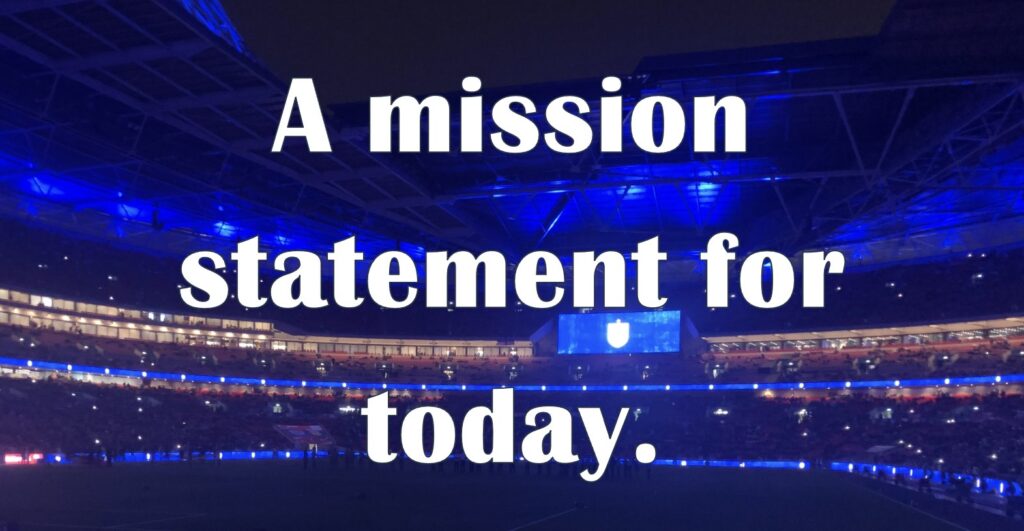
A mission statement for today. Today being now, at the time of reading.
On this day, we revisit the why’s of how Pre-Image Learning and Action (PILAA) came about and reflect on our purpose. PILAA was founded in 2017 with the aim of empowering the underdog, and in utilising creativity to champion difference and to make a difference.
Today we renew our commitment of being of service to others, whether to individuals, organisations or to society at large.
We welcome work that wants to make a positive impact in our workplace environments. Workplaces being as different and as unique to the individuals who operate in those spaces.
We welcome work that invests in positive workplace cultures, that sees collaboration with us as a stepping stone to making real impact and change.
At PILAA we see things differently. We know that without hope, there is only hopelessness. By the same token, without hopelessness, there can never be any hope.
And it is here at this intersection of nuance, awareness and hope, that we at PILAA re-commit to being an organisation of service, in our work and mission.
Dr. Ope Lori, Founder & CEO, PILAA


Listen to article here.
“I think that people are sometimes reluctant to confront the powerful. But the truth is that if we don’t confront the powerful, we will never be able to have a better world.” – UN Secretary General António Guterres
Waiting in queues that would flow into numerous streets to cope with the capacity of the audience, on the 17th of January 2026, I was fortunate to have attended the 80th Anniversary of the United Nation’s General Assembly, ‘UNGA at 80: From 1946 to Our Future’. Marketed as an event that would see 1800 people in attendance and was open to the public, post-event, the organisers broadcasted that in fact “2,000 brilliant people had come together “to remember the reasons why the UN was founded in the first place and to talk seriously about how to keep the spirit of peace and cooperation alive in a changing world.”
This powerful event took place at the iconic Central Hall in Westminster, where the first general assembly had taken place in 1946. This is our account of the festivities, an event that would was jam packed with influential figures of our time, notwithstanding the departing UN Secretary General António Guterres, who despite the current geo-political turbulence, gave the opening address. Guterres himself would be in campaigning in the UK, and on the news, about the importance of the UN and its founding principles, as well as the institutes pressing financial crisis, that would see much of its work hanging on a shoe thread.
The UN currently is made up of 193 member states, countries, that are bound by the UN Charter, an instrument or rulebook rather on international law. Tellingly, in reference to the founding structure and its principles, given the current geo-political turbulent climate that the world sees itself in now, Guterres himself, a former Portuguese prime minister would go on to say to the audience, that “1945 problem- solving” wouldn’t solve 2026 problems”. These problems centred on growing global conflict, inequality and unpredictability, wilful violations of international law and on the death of multilateralism.
The message was clear, not just in remembering the importance and need for the United Nations, but also of the Security Council as one of its main organs. The Security Council was designed to maintain international peace and security, however, its image of late, was no longer seen to represent the world and was “ineffective”. Despite these challenges however, for a better world and society, we are urged to come together, as people beyond borders. Borders which are not just in terms of land and sea, geography, but borders on an interpersonal level.
Guterres said, ‘if this period has taught us anything, it is that our challenges are ever more borderless, and ever more interconnected. The only way to address them is together.
And that requires a robust, responsive and well-resourced multilateral system.”
Indeed, the key theme throughout the event, was advocating for ‘multilateralism,’ meaning the alignment of multiple countries in pursuit of a common goal. The idiom “united we stand, divided we fall”, has never chimed truer.
A few other takeaways from this historic moment included:
This article was written by Dr Ope Lori, Founder and CEO of Pre-Image Learning and Action.
To read the full article, you must be a PILAA Member.
Listen to article here. “I think that people are sometimes reluctant to confront the powerful. But the truth is that if we don’t confront the powerful, […]

Imagine that you’ve been for a relaxing walk with your dog and now you’re back in the cosy warmth of your home. You make a […]

December Awareness Days Download our Celebration of Light Special, or scroll down to see them all below, for December Awareness Days, that fall within the […]


Listen to article here.
Alice Wong, the disability activist, writer and gamechanger sadly passed away last month on the 14th of November 2025. Wong was a pioneer of the Disability Justice Movement and there have been floods of accounts and powerful testimonies of who she was and the impact that she has left on the lives of many people, including friends and family, collaborators, and more centrally, to the community of disabled people, that she had tirelessly advocated for and with. As someone living with muscular dystrophy and self-identified as a “disabled cyborg”, she used a powerchair and assistive breathing devices, as well as text-to-speech technology, following losing the ability to speak in recent years. However, she used her voice to not only to raise awareness around the different complexities and challenges of people living with disabilities, and their experiences, but she did so in a way that spoke to the everyday experiences of being disabled, in all its forms, shapes and sizes.
Wong was also the daughter of Honk Kong immigrants, and it was due to these overlapping experiences, that she took aim at dismantling the systemic structures that disadvantaged disabled people, especially those from marginalised groups, whether they be people of colour, immigrants or members of the LGBTQ+ community. She was an advocate for ensuring that people with disabilities should have the full autonomy to live their lives, on their own terms and without permission from others.
Whilst equality, diversity and inclusion (ED&I) is my line of work and more specifically a way of life, I’m aware that the field of disability inclusion, is something that I still need to learn more about, especially where those experiences of disability are outside of my own lived experience. Indeed, even coming across the work of Alice Wong, only came recently, on a visit to the V&A exhibition Design and Disability, which is currently on display until the 15th of February 2026. In this fantastic show that looked at all things around disability, accessibility, communicative technology, art, design and fashion, it was here that I came across Wong’s edited book Disability Visibility: First-Person Stories from the Twenty-First Century (2020), that was being sold in the gift shop.
In addition to purchasing this book, I also bought the exhibitions catalogue of the same name and the children’s book You’re So Amazing (2023) by James & Lucy Catchpole, with illustrations by Karen George. This beautifully written and illustrated story, won the award for the most inclusive book for children in 2024. This is a story about a little boy called Joe with one leg, and how as a society, we respond to those with disabilities, and how we can do better, in sometimes, not “over doing it”.
To celebrate the impact of Wong’s legacy, this article will reflect on some of her words and themes from the book. Whilst the breadth and range of the collection of essays and contributors, aren’t necessarily the focus of this article, for that I urge you as a reader to do the work and get the book, but it is her voice, as the thread that glues them all together that I’ll be drawing upon, as a call to action and a beacon of hope.

This article was written by Dr Ope Lori, Founder and CEO of Pre-Image Learning and Action.
To read the full article, you must be a PILAA Member.
Listen to article here. Alice Wong, the disability activist, writer and gamechanger sadly passed away last month on the 14th of November 2025. Wong was a […]

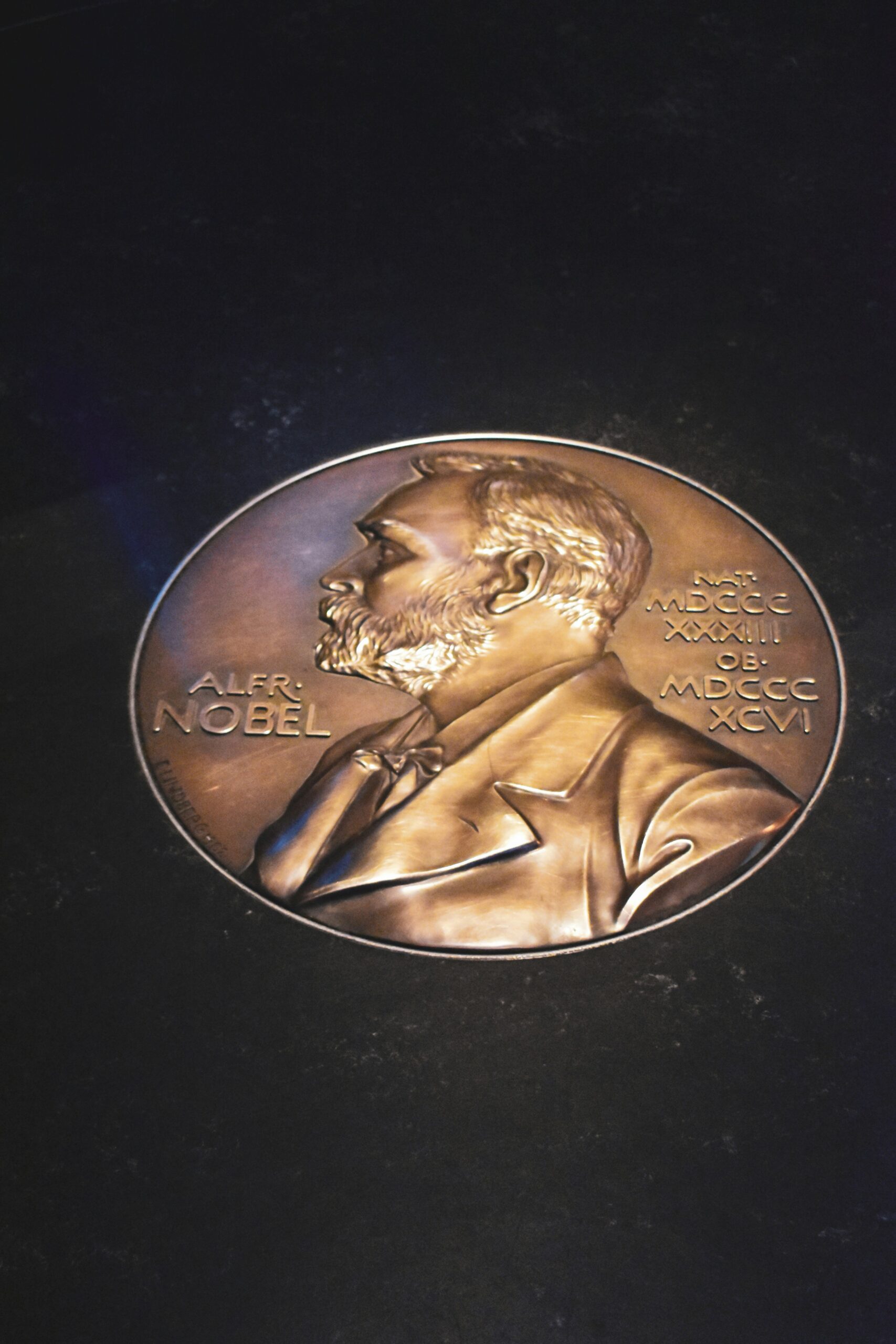
Photo by Anastasiya D on Unsplash
Listen to article here.
Early October is always an interesting and exciting time in certain fields, because that’s when the six Nobel Prizes are announced in medicine or physiology, chemistry, physics, economics, literature and peace. For people who work in these subjects or industries, they are often eager to find out whose discoveries or achievements will be honoured this time; for some, there’s even a hope that maybe this year it could finally be them getting that phone call from Stockholm (or, in the case of the peace prize, that phone call from Oslo). The announcement of the award could be the pinnacle of someone’s career or, conversely, it could be the reason behind crushing disappointment and the worry that their hard work won’t ever be formally recognised.
Perhaps part of the stress and anxiety around the Nobel Prizes or other major awards, such as the Fields Medal for mathematics, or the Oscars or Emmys for acting, or the Turing for computer science and so on, is due to the fact that only one such award is handed out each year, sometimes to just one individual, as in the Nobel Prize for literature or the Golden Globe for best actor, and in some cases to two or three people who have worked together. For every person, pair, trio or small group that is given the award, there are hundreds or even thousands of others who continue to toil and to contribute to their subject area without much acknowledgement. Certainly, many people work at a particular job because they love what they do and they want to make the world a better place, even if in a small way, on a daily basis. But it’s also true that to receive a little bit of gratitude and credit can go a long way. This is important to remember in a workplace.
It’s worth acknowledging that the Nobel Prizes – and all other such awards – are a little controversial. In terms of the Nobel, Alfred Nobel was a Swedish inventor and businessman. He made a fortune when he invented dynamite; while dynamite definitely has its benefits, some people argue that it may also have contributed to the destruction wrought by wars and also led to the deaths of many innocent people. Nobel lived well off this and other inventions and it has been suggested that he tried to assuage his guilt somewhat by writing a will that said he wanted to leave his estate to a foundation that would honour important human – and ideally humane – achievements. A further controversy is that only certain fields are recognised by the Nobel Prizes; besides the lack of mathematics, biology is missing, as are nearly all arts other than literature, the social sciences and still others. This can suggest that those fields are considered to be less vital than the ones that receive an award. Again, this is true of other awards; for each field or individual that is honoured, many others are excluded.
Related to this, many major scientists, writers or activists who are widely considered to have been worthy of the Nobel Prize have not received it, while others who are more or less now forgotten in their fields are viewed as erroneous choices; similarly, some areas within a given field seem to get more attention than others; and some decisions seem very iffy in retrospect. There’s also been plenty of discussion about how biased the Prize committees are and whether their decisions are influenced by geopolitical concerns; as an example, it’s broadly assumed that the literature committee tries not to pick winners from the same nation or same language too often, which means that some of their choices are thought to be forced by such considerations, in turn leading to some literary critics and authors shrugging at or even criticising the Prize in Literature. Furthermore, some recipients of a Nobel have turned it down, such as George Bernard Shaw, or have refused to attend the Award ceremony, not wanting to be linked to such an award or event.
Written by Dr B.J. Woodstein (Research Associate, PILAA)
To read the full article, you must be a PILAA Member.
Photo by Anastasiya D on UnsplashListen to article here. Early October is always an interesting and exciting time in certain fields, because that’s when the six […]
| Cookie | Duration | Description |
|---|---|---|
| cookielawinfo-checkbox-analytics | 11 months | This cookie is set by GDPR Cookie Consent plugin. The cookie is used to store the user consent for the cookies in the category "Analytics". |
| cookielawinfo-checkbox-functional | 11 months | The cookie is set by GDPR cookie consent to record the user consent for the cookies in the category "Functional". |
| cookielawinfo-checkbox-necessary | 11 months | This cookie is set by GDPR Cookie Consent plugin. The cookies is used to store the user consent for the cookies in the category "Necessary". |
| cookielawinfo-checkbox-others | 11 months | This cookie is set by GDPR Cookie Consent plugin. The cookie is used to store the user consent for the cookies in the category "Other. |
| cookielawinfo-checkbox-performance | 11 months | This cookie is set by GDPR Cookie Consent plugin. The cookie is used to store the user consent for the cookies in the category "Performance". |
| viewed_cookie_policy | 11 months | The cookie is set by the GDPR Cookie Consent plugin and is used to store whether or not user has consented to the use of cookies. It does not store any personal data. |